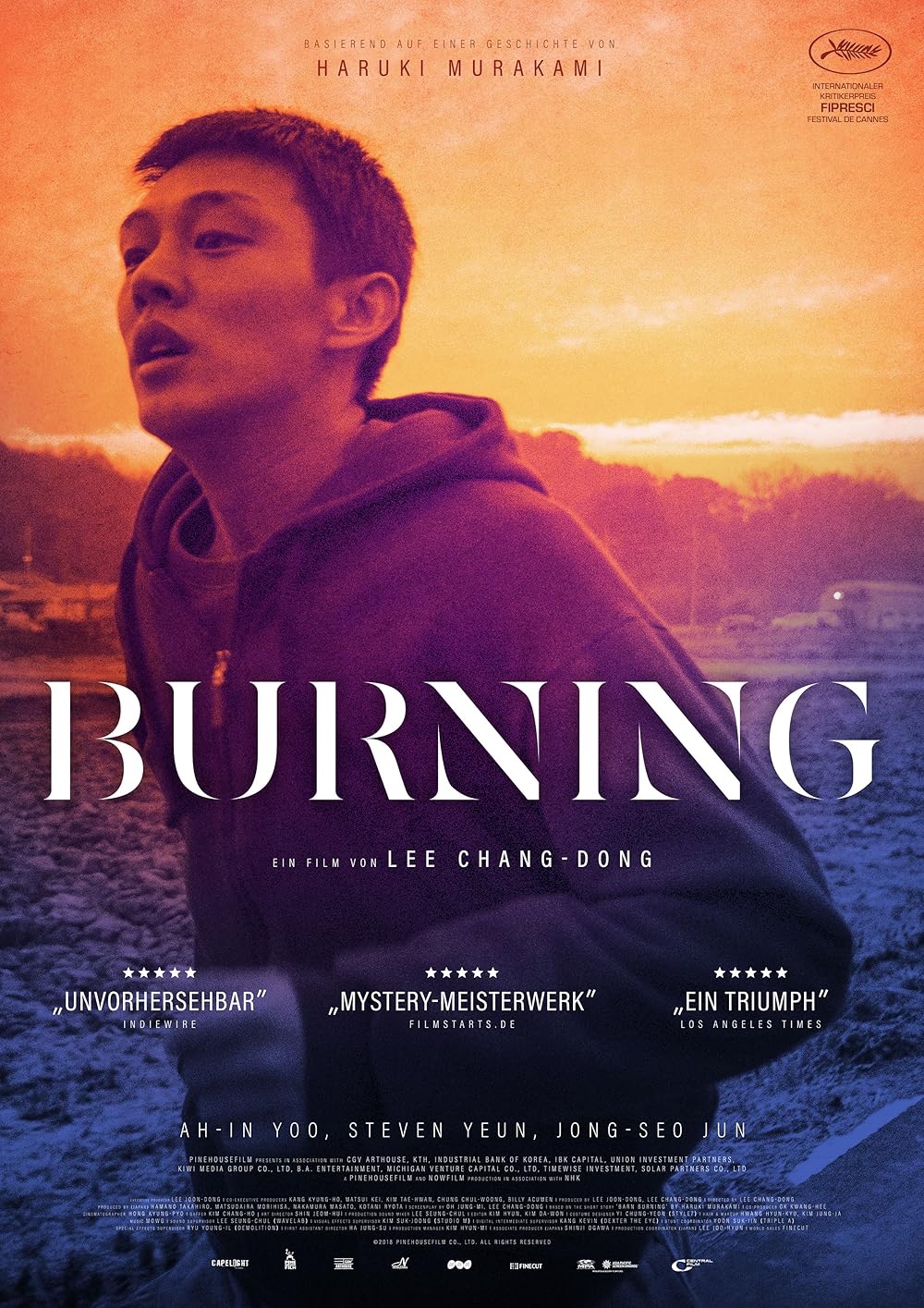
Burning (버닝)
Director Lee Chang-dong
Cast Yoo Ah-in / Steven Yeun / Jeon Jong-seo
Genres Thriller / Mystery / Drama
Running Time 148 minutes
Release year 2018
IMDb 7.4 / Rotten Tomatoes 95% / Letterboxd 4
OTT Netflix / Watcha / TVING
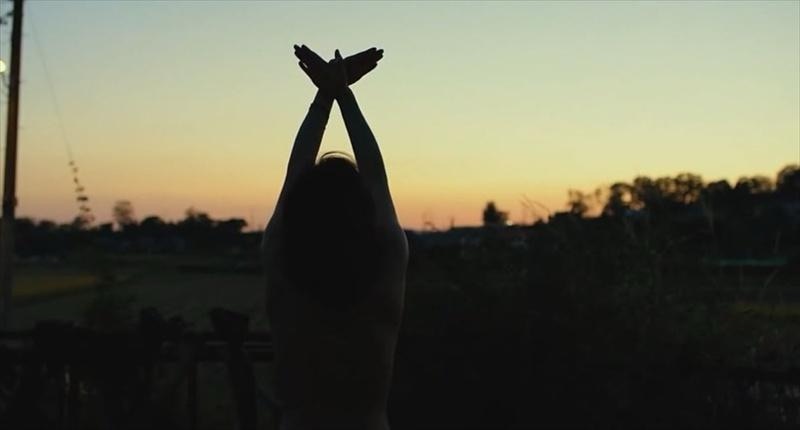
The Great Hunger: Beyond the Physical
At the heart of Lee Chang-dong’s Burning lies the concept of the “Great Hunger.” While the “Little Hunger” pertains to the basic biological need for food, the Great Hunger is an existential ache—a search for the meaning of life in a world that often feels devoid of it. The film meticulously charts the collision between these two states of being through the lives of its three protagonists. Jong-su, a struggling writer living in the shadow of his father’s rage, embodies the quiet desperation of a youth abandoned by the promises of capitalism. In contrast, Ben is the personification of a “Great Gatsby” for the neoliberal era, a man who has consumed everything and is now left with a void that can only be filled by the spectacle of destruction.
이창동의 <버닝> 심장부에는 ‘그레이트 헝거’라는 개념이 자리 잡고 있다. 당장 배를 채워야 하는 생물학적 욕구가 ‘리틀 헝거’라면, 그레이트 헝거는 삶의 의미를 갈구하는 실존적 통증이다. 영화는 세 주인공의 삶을 통해 이 두 가지 허기가 충돌하는 지점을 정교하게 추적한다. 아버지의 분노 아래 억눌린 채 살아가는 작가 지망생 종수는 자본주의의 약속에서 소외된 청춘의 고요한 절망을 대변한다. 반면 벤은 신자유주의 시대의 ‘위대한 개츠비’다. 현실의 모든 것을 이미 소비해버린 그는 이제 파괴의 화려함으로만 채울 수 있는 공백 속에 남겨진 인물이다.
The Metaphor of the Greenhouse
The metaphor of the burning greenhouse is the film’s most haunting enigma. Ben claims to burn greenhouses for fun, describing them as “useless” and “waiting to be burned.” In a world defined by class disparity, these greenhouses become chilling stand-ins for people like Hae-mi—individuals who exist on the margins and can disappear without a trace. Lee Chang-dong uses this metaphor to critique the cold indifference of the elite. To Ben, destruction is not an act of malice but an aesthetic choice, a way to impose order on a chaotic world. For Jong-su, however, the burning is a terrifying reminder of his own fragility and the precariousness of those he loves.
비닐하우스를 태우는 행위는 이 영화에서 가장 오싹한 수수께끼다. 벤은 재미로 비닐하우스를 태운다고 말하며, 그것들이 마치 태워지기를 기다리는 ‘쓸모없는’ 존재인 것처럼 묘사한다. 계급의 격차가 지배하는 세계에서 이 비닐하우스는 해미와 같은 인물들에 대한 서늘한 비유가 된다. 사회의 변두리에 존재하며 흔적도 없이 사라져도 아무도 찾지 않는 이들이다. 이창동은 이 은유를 통해 엘리트 계층의 차가운 무관심을 비판한다. 벤에게 파괴는 악의가 아니라 미학적 선택이며, 무질서한 세계에 질서를 부여하는 방식이다. 하지만 종수에게 그 불길은 자신의 나약함과 사랑하는 이의 위태로움을 상기시키는 공포 그 자체다.
Pantomime and Ontological Uncertainty
Hae-mi’s pantomime of the orange sets the ontological tone for the entire narrative. The secret, she explains, is not to believe the orange is there, but to forget that it isn’t. This philosophy of absence permeates every frame. Is the cat real? Did the well in the courtyard ever exist? Lee Chang-dong masterfully blurs the line between reality and hallucination, forcing the audience into Jong-su’s state of growing paranoia. The film suggests that in a world where the truth is obscured by the smog of Paju and the propaganda of the borderland, the only things that are truly “real” are the voids left behind by the vanished.
귤을 까먹는 해미의 팬터마임은 서사 전체의 존재론적 톤을 설정한다. 비결은 귤이 거기 있다고 믿는 게 아니라, 없다는 사실을 잊는 것이다. 이러한 부재의 철학은 영화의 모든 프레임에 스며들어 있다. 고양이는 실재하는가? 마당의 우물은 정말 있었는가? 이창동은 현실과 환각의 경계를 노련하게 흐리며 관객을 종수의 편집증 속으로 몰아넣는다. 파주의 매연과 접경지의 대남 방송이 진실을 가리는 세계에서, 유일하게 ‘진실한’ 것은 사라진 자들이 남긴 공백뿐임을 영화는 시사한다.
The Cold Birth of the Writer
The climax of Burning—a brutal, frigid incineration in the snow—is a moment of terrifying transformation. Whether the final act of violence is a literal revenge or the metaphorical completion of Jong-su’s manuscript is intentionally left ambiguous. By stripping himself bare and setting fire to Ben’s Porsche along with the evidence of his own past, Jong-su finally claims his voice as a writer. It is a birth through annihilation. The film concludes not with a resolution, but with a chilling silence that echoes the Great Hunger of the audience. We are left staring into the ashes, wondering if the fire actually purged the world or if it merely left us in total darkness.
설원 위에서 벌어지는 잔혹하고 차가운 소각은 공포스러운 변모의 순간이다. 이 마지막 폭력이 구체적인 복수인지, 아니면 종수가 집필하던 원고의 은유적 완성인지는 의도적으로 모호하게 남겨진다. 스스로 나체가 되어 자신의 과거와 벤의 포르쉐를 함께 불태우며, 종수는 마침내 소설가로서 자신의 목소리를 획득한다. 소멸을 통한 탄생이다. 영화는 해소가 아닌 서늘한 침묵으로 끝을 맺으며 관객의 그레이트 헝거를 자극한다. 우리는 잿더미를 응시하며 자문하게 된다. 그 불꽃이 정말 세계를 정화했는지, 아니면 우리를 완전한 어둠 속에 버려두었는지.