Kingdom(킹덤)
Director Kim Seong-hun / Park In-je
Screenwriter Kim Eun-hee
Cast Ju Ji-hoon / Ryu Seung-ryong / Bae Doona
Genre Period Drama / Political Thriller / Zombie
episodes 12 + 1 special
IMDb 8.3 / Rotten Tomatoes 94%
OTT Netflix Original
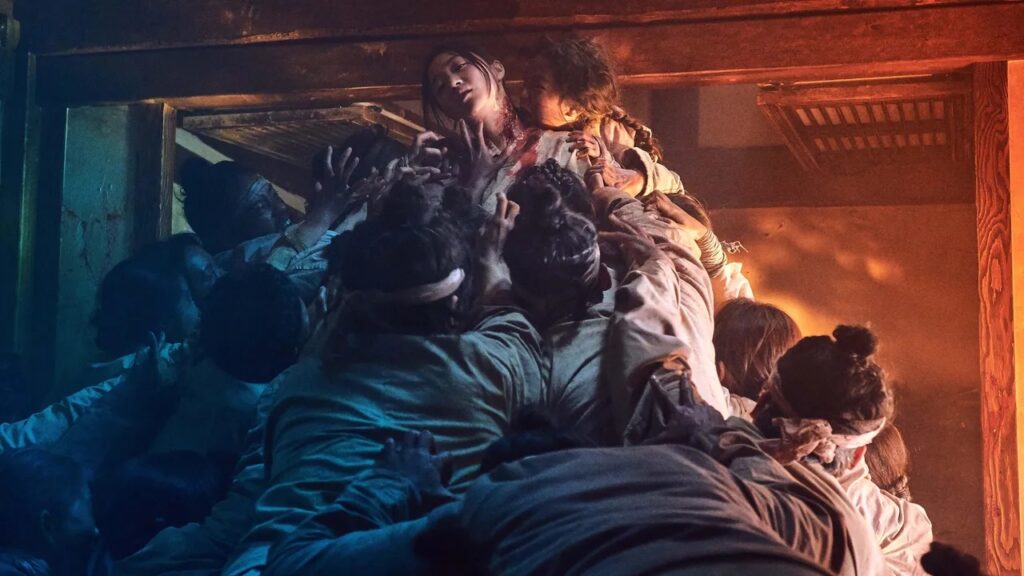
The Metaphor of Starvation
허기의 은유
In Kingdom, hunger is the primary engine that drives both the plot and the horror. Screenwriter Kim Eun-hee masterfully reframes the zombie archetype—traditionally a symbol of mindless consumerism in Western media—into a symbol of desperate, structural poverty. The commoners do not turn into monsters because of a random curse; they become monsters because they have nothing to eat but the tainted remains of their own kind. This gruesome cycle of cannibalism is a direct result of a feudal system that stripped the land and its people of their dignity. The speed and aggression of the “K-zombie” reflect a frantic, biological urge to fill a void that was created by the state’s failure. It is a terrifying visualization of the phrase “the hungry have no choice,” turning a physiological need into a national catastrophe.
<킹덤>에서 허기는 플롯과 공포를 움직이는 핵심 동력이다. 김은희 작가는 서구 미디어에서 주로 무분별한 소비주의의 상징이었던 좀비 아키타입을 절박하고 구조적인 빈곤의 상징으로 완벽하게 재구성했다. 백성들은 무작위인 저주 때문에 괴물이 된 것이 아니다. 그들은 오염된 동족의 사체 외에는 먹을 것이 없는 처지로 내몰렸기에 괴물이 되었다. 이 잔인한 동족 상잔의 순환은 땅과 백성에게서 존엄성을 뺏어버린 봉건 제도의 직접적인 결과물이다. ‘K-좀비’의 속도와 공격성은 국가의 실패가 만들어낸 공백을 채우려는 광기 어린 생물학적 충동을 반영한다. 이는 “배고픈 자에게는 선택지가 없다”는 말을 시각적인 재앙으로 변주하며, 생리적 욕구를 국가적 참사로 치환시킨다.
Corruption as a Pathogen
병원균으로서의 부패
The series suggests that the real plague is not the “Resurrection Plant,” but the rotting hierarchy of the Joseon court. While the lower classes suffer from physical starvation, the elite Haewon Cho clan suffers from a psychological and political starvation for absolute control. Their greed acts as a pathogen that paralyzes the nation’s response to the crisis. By treating the infected king as a mere tool to maintain their grip on power, they allow the virus to seep into the veins of the country. This narrative structure highlights a cynical truth: a society’s ability to survive a disaster is determined not by its resources, but by the integrity of its leadership. The slow, bureaucratic indifference of the ministers provides a chilling contrast to the frenetic pace of the plague, suggesting that institutional rot is far more difficult to cure than a biological infection.
이 시리즈는 진짜 역병이 ‘생사초’가 아니라 조선 조정의 썩어빠진 위계 질서라고 말한다. 하층민이 물리적 기아에 시달릴 때, 엘리트 계층인 해원 조씨 일가는 절대적인 통제권을 향한 심리적, 정치적 기아에 시달린다. 그들의 탐욕은 위기에 대한 국가의 대응을 마비시키는 병원균으로 작용한다. 감염된 왕을 권력 유지의 도구로만 취급함으로써, 그들은 역병이 국가의 혈관으로 스며들도록 방치한다. 이러한 서사 구조는 냉소적인 진실을 조명한다. 재난에서 살아남는 사회의 능력은 자원이 아니라 리더십의 청렴함에 의해 결정된다는 것이다. 대신들의 느리고 관료적인 무관심은 역병의 급박한 속도와 서늘한 대조를 이루며, 제도적인 부패가 생물학적인 감염보다 치유하기 훨씬 어렵다는 점을 시사한다.
The Visual Language of Dread
공포의 시각 언어
Visually, Kingdom is a triumph of aesthetic contrast. The production design emphasizes the sharp divide between the pristine, symmetrical beauty of the royal palaces and the muddy, chaotic carnage of the provinces. The use of traditional Korean architecture, with its expansive courtyards and intricate wooden structures, provides a unique stage for horror. When the pale, blood-stained zombies swarm through the elegant Hanok corridors, it creates a sense of defilement that is both shocking and mesmerically beautiful. The “K-zombie” movements—inspired by modern dance and characterized by cracking joints and erratic lunges—further distinguish the series from its predecessors. This meticulously crafted visual language ensures that the terror is not just jump-scares, but a sustained atmosphere of cultural and social collapse, where the elegance of the past is literally torn apart by the ghosts of its failures.
시각적으로 <킹덤>은 미학적 대비의 승리다. 프로덕션 디자인은 왕궁의 정갈하고 대칭적인 미와 지방의 진흙탕 같은 혼돈의 학살을 날카롭게 분리한다. 넓은 마당과 정교한 목조 구조를 가진 한국 전통 건축물은 공포를 위한 독특한 무대가 된다. 창백하고 피칠갑을 한 좀비들이 우아한 한옥 복도를 휩쓸고 지나갈 때, 그것은 충격적이면서도 매혹적인 아름다움을 가진 모독의 감각을 형성한다. 현대 무용에서 영감을 받아 관절이 꺾이고 불규칙하게 돌진하는 ‘K-좀비’의 움직임은 이 시리즈를 기존 좀비물과 차별화한다. 세심하게 설계된 이 시각 언어는 공포를 단순한 ‘점프 스케어’에 가두지 않고, 과거의 우아함이 그 실패의 유령들에 의해 찢겨 나가는 문화적, 사회적 붕괴의 지속적인 분위기로 승화시킨다.
The Crown and the People
왕관과 백성
The transformation of Prince Lee Chang serves as the moral heart of the sprawling narrative. His evolution from a fugitive royal to a revolutionary leader redefines the meaning of sovereignty. In the beginning, Chang is motivated by survival and his rightful place on the throne. However, as he witnesses the piles of bodies and the desperation of the living, he realizes that the “Heaven” mentioned in political rhetoric is not a divine mandate, but the people themselves. His decision to abandon the traditional symbols of power to save the nameless masses is a radical rejection of the very system that created the plague. Kingdom concludes that true legitimacy is not inherited through blood but earned through the protection of life. It is a powerful message for any era, suggesting that the only way to end a cycle of suffering is for those at the top to finally look down and see the humanity of those at the bottom.
이창 세자의 변화는 이 거대한 서사의 도덕적 핵심이다. 도망자 신세의 왕족에서 혁명적인 리더로 거듭나는 그의 진화는 통치권의 의미를 재정의한다. 초기에 창은 생존과 왕좌에 대한 정당한 권리에 의해 움직인다. 하지만 쌓여가는 시체들과 산 자들의 절박함을 목격하며, 그는 정치적 수사 속에 등장하는 ‘천명(하늘)’이 신성한 권한이 아니라 바로 백성 자신임을 깨닫는다. 이름 없는 대중을 구하기 위해 전통적인 권력의 상징들을 포기하는 그의 결정은 역병을 만들어낸 시스템 자체에 대한 급진적인 거부다. <킹덤>은 진정한 정당성이 혈통을 통해 상속되는 것이 아니라 생명을 보호함으로써 얻어지는 것이라고 결론짓는다. 이는 어떤 시대에도 통용되는 강력한 메시지로, 고통의 순환을 끊는 유일한 방법은 정점에 선 자들이 비로소 아래를 내려다보며 그들의 인간성을 마주하는 것뿐임을 시사한다.