The Boy and the Heron (그대들은 어떻게 살 것인가)
Director Hayao Miyazaki
Cast Yoo Ah-in / Steven Yeun / Jeon Jong-seo
Genres Animation / Fantasy
Running Time 124 minutes
Release year 2023
96th Academy Award for Best Animated Feature
IMDb 7.5 / Rotten Tomatoes 97% / Letterboxd 4.1
OTT Netflix / Max
The Fire and the Mother: The Trauma of Origin
The film opens not with a dream, but with a nightmare—the searing heat of wartime Tokyo and the agonizing loss of a mother. For Mahito, the fire is the original sin of his existence. Miyazaki strips away the romanticism often found in his earlier works, presenting a protagonist defined by a hollow core. This is not a grand adventure; it is a desperate retreat into the subconscious to process a reality that is too bright to look at and too hot to touch. The fire is at once the destroyer of his past and the forge of his future. It is the inescapable gravity of history that pulls Mahito toward the mysterious tower.
영화는 꿈이 아닌 악몽으로 개막한다. 전쟁 중인 도쿄의 열기. 어머니의 죽음. 마히토에게 불은 존재의 원죄다. 미야자키는 이전 작품들이 가졌던 낭만주의를 걷어낸다. 남겨진 것은 텅 빈 내면을 가진 소년뿐이다. 이것은 장엄한 모험이 아니다. 직면하기엔 너무 눈부시고 만지기엔 너무 뜨거운 현실로부터 도망쳐 잠재의식으로 침잠하는 과정이다. 불은 과거를 태우는 파괴자이자 미래를 벼리는 용광로다. 마히토를 의문의 탑으로 끌어당기는 것은 거부할 수 없는 역사의 중력이다.
The Tower: A Necropolis of Creative Will
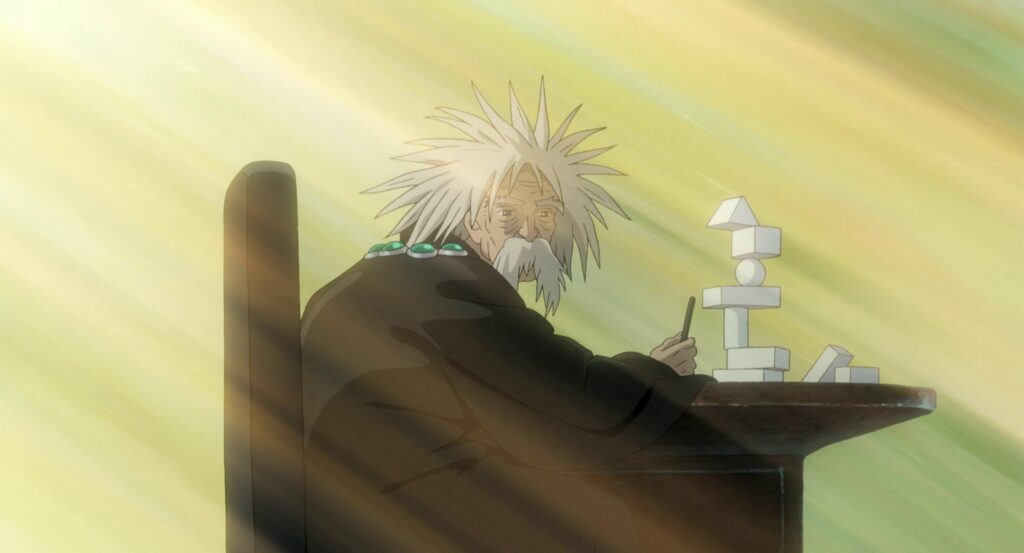
The tower, built by the Great-Uncle, is a labyrinth of memories—a physical manifestation of a creator’s life work. It is a world built on stones stained with “malice.” Here, Miyazaki confronts his own legacy. Is the world of animation a sanctuary or a prison? The tower is populated by those who cannot survive in the real world: the Warawara, who seek to be born, and the Parakeets, who have turned into mindless fascists. The structure is crumbling, not because of external force, but because the weight of its own artifice has become unbearable. It is a necropolis of beauty, maintained by a fading god who desperately seeks a successor.
큰할아버지가 세운 탑은 기억의 미로다. 창작자의 일생이 물리적으로 현신한 공간. 그곳은 ‘악의’가 깃든 돌로 쌓아 올린 세계다. 여기서 미야자키는 자신의 유산과 대면한다. 애니메이션의 세계는 안식처인가 감옥인가. 탑은 현실에서 살아남을 수 없는 자들로 가득하다. 태어나길 기다리는 와라와라. 맹목적인 파시스트가 된 잉꼬들. 탑은 무너지고 있다. 외부의 충격 때문이 아니다. 인위가 가진 무게를 견디지 못해서다. 후계자를 갈구하는 늙은 신이 관리하는, 아름다운 납골당일 뿐이다.
The Heron and the Lie: The Duality of Truth
The Gray Heron is a repulsive yet essential guide. He is a liar, a shapeshifter, and a mirror. In Ghibli’s past, animal companions were sources of wonder; here, the Heron is a source of irritation and grotesque reality. He represents the duality of the creative process—the “beautiful lie” that art provides to mask the ugliness of existence. Mahito’s relationship with the Heron is not one of friendship, but of mutual recognition of their flaws. To enter the tower, one must accept the lie. To exit it, one must learn to distinguish between the feather that flies and the bone that stays grounded.
왜가리는 혐오스럽고도 필수적인 인도자다. 거짓말쟁이. 변신술사. 그리고 거울. 과거 지브리의 동물 동반자가 경이로움의 원천이었다면, 이 왜가리는 짜증과 기괴한 현실의 원천이다. 그는 창작 과정의 이중성을 대변한다. 실재의 추함을 가리기 위해 예술이 제공하는 ‘아름다운 거짓말’. 마히토와 왜가리의 관계는 우정이 아니다. 서로의 결함에 대한 상호 인정이다. 탑에 들어가기 위해선 거짓을 수용해야 한다. 탑을 나가기 위해선 나는 깃털과 바닥에 박힌 뼈를 구별할 줄 알아야 한다.
Choosing Malice over Perfection
The climax offers a profound choice: to build a world of pure, unblemished beauty or to return to a world defined by conflict and death. The Great-Uncle offers Mahito the “clean” stones to build his own kingdom. Mahito refuses. He points to the scar on his head—a wound he inflicted upon himself. By acknowledging his own malice, he rejects the static perfection of the tower. Miyazaki concludes that a world without pain is a world without life. To live is to be stained, to be hurt, and to eventually hurt others. Returning to the scorched earth of 1945 is a radical act of acceptance. It is the choice to be human in a world of collapsing gods.
절정의 순간은 심오한 선택을 강요한다. 흠 없는 순수함의 세계를 구축할 것인가, 아니면 갈등과 죽음이 지배하는 현실로 돌아갈 것인가. 큰할아버지는 마히토에게 자신만의 왕국을 세울 ‘깨끗한’ 돌을 건넨다. 마히토는 거절한다. 자신의 머리에 난 흉터를 가리킨다. 스스로 가한 상처다. 자신의 악의를 인정함으로써 소년은 탑의 정지된 완벽함을 거부한다. 고통 없는 세계는 생명 없는 세계라는 미야자키의 결론이다. 산다는 것은 얼룩지는 것이고, 상처 입는 것이며, 끝내 타인에게 상처를 주는 일이다. 1945년의 폐허로 돌아가는 행위는 급진적인 수용이다. 붕괴하는 신들의 세계에서 인간으로 남겠다는 의지다.
The Fragility of Memory: The Final Vanishing
The film ends not with a grand epiphany, but with a quiet forgetting. As Mahito leaves the tower, the pebbles in his pocket lose their magic. The world he experienced begins to fade, like a dream upon waking. This is Miyazaki’s most honest confession: that even the most magnificent art is ephemeral. It cannot save the world; it can only provide a temporary lens through which we might understand our own sorrow. The question “How do you live?” is not answered by the film; it is handed back to the audience. We are left in the silence after the collapse, tasked with building something real out of the malice of our own lives.
영화는 거창한 깨달음이 아닌 고요한 망각으로 끝난다. 탑을 나서는 순간, 주머니 속 돌맹이들은 마법을 잃는다. 그가 경험한 세계는 잠에서 깬 꿈처럼 흐릿해진다. 미야자키의 가장 정직한 고백이다. 아무리 장엄한 예술도 결국 덧없다는 것. 예술은 세상을 구원하지 못한다. 다만 우리가 각자의 슬픔을 이해할 수 있는 일시적인 렌즈를 제공할 뿐이다. “그대들은 어떻게 살 것인가”라는 질문에 영화는 답하지 않는다. 질문을 관객에게 되돌려줄 뿐이다. 우리는 붕괴 이후의 정적 속에 남겨진다. 스스로의 악의를 재료 삼아, 진짜 삶을 구축해야 할 과제를 안은 채로.